
ART1FACT LABS x Back At The Ranch
Wendy Henry was fifteen, walking through a Neiman Marcus in Miami, when she spotted a pair of burgundy alligator boots on a shelf. Her father was a plumber. Nobody in her family dressed like a cowgirl. She had no business wanting them.
She bought them anyway.
This is where the story starts. Wendy went to college to be a teacher. Never made it to a classroom. She opened her first store in Miami in 1972, an exercise clothing boutique. Then in her thirties, a women’s boutique on the Upper West Side, designing broomstick skirts and blanket coats cut from vintage blankets. Ralph Lauren was paying attention. The store was full. And still, every morning on the subway, something felt wrong.
“I looked at myself in the subway one day and just knew I was done.”
She visited Santa Fe for a weekend in 1989. The light was different. The air was different. She called it a vibration, the kind you either feel immediately or you don’t. Six months later she’d sold the apartment, closed the store, and moved west for good. Starting over at forty, in a city she barely knew, in an industry she hadn’t entered yet.


I looked at myself in the subway one day and just knew I was done.
Back at the Ranch opened in 1990. What she built over the next thirty-five years: a factory in El Paso staffed by the Mendoza family, three generations of artisans running Singer sewing machines from the 1940s and handmade knives. Between nine and twenty pairs a week. That's it.
"My boots are not factory-made," Henry said. "It's not production."
The Western boot industry she walked into was brown, black, male-dominated, and stuck in the 1950s. She redesigned the lasts for women's feet, opened her own supply chain, started sourcing crocodile, ostrich, waterproof hippo, alligator dyed to whatever specific red a client had been chasing their whole life. Forrest Fenn, the Santa Fe art dealer and treasure hunt legend, gave her the clearest possible direction early on: stop selling inexpensive boots. Sell the good stuff.
She has, ever since.
Tom Ford came in wanting one black pair. Left with three. Jane Fonda called it the best boot shop in the country. Jimmy Page, Post Malone, Shaboozey. Someone recently wanted boots to match the interior of their new Rolls Royce. Henry said she could do that.
Cowboy Boots are quintessential American fashion that never goes out of style.
Now she's 75 and teaching everything she knows to her granddaughter Jackie Hopper Daru, a sixth-generation Texan who moved from San Francisco to Santa Fe to inherit the business. Two women, thirty-five years apart. One set of hands passing to another.
"She literally broke through the glass ceiling in an industry where no women were welcome," Daru said. "I've looked up to her my entire life."
Henry isn't going anywhere. "I like to work. I'll go in when I feel like it."
Our boots are more than just fashion—they are personal statements. They carry stories, milestones, and legacies.
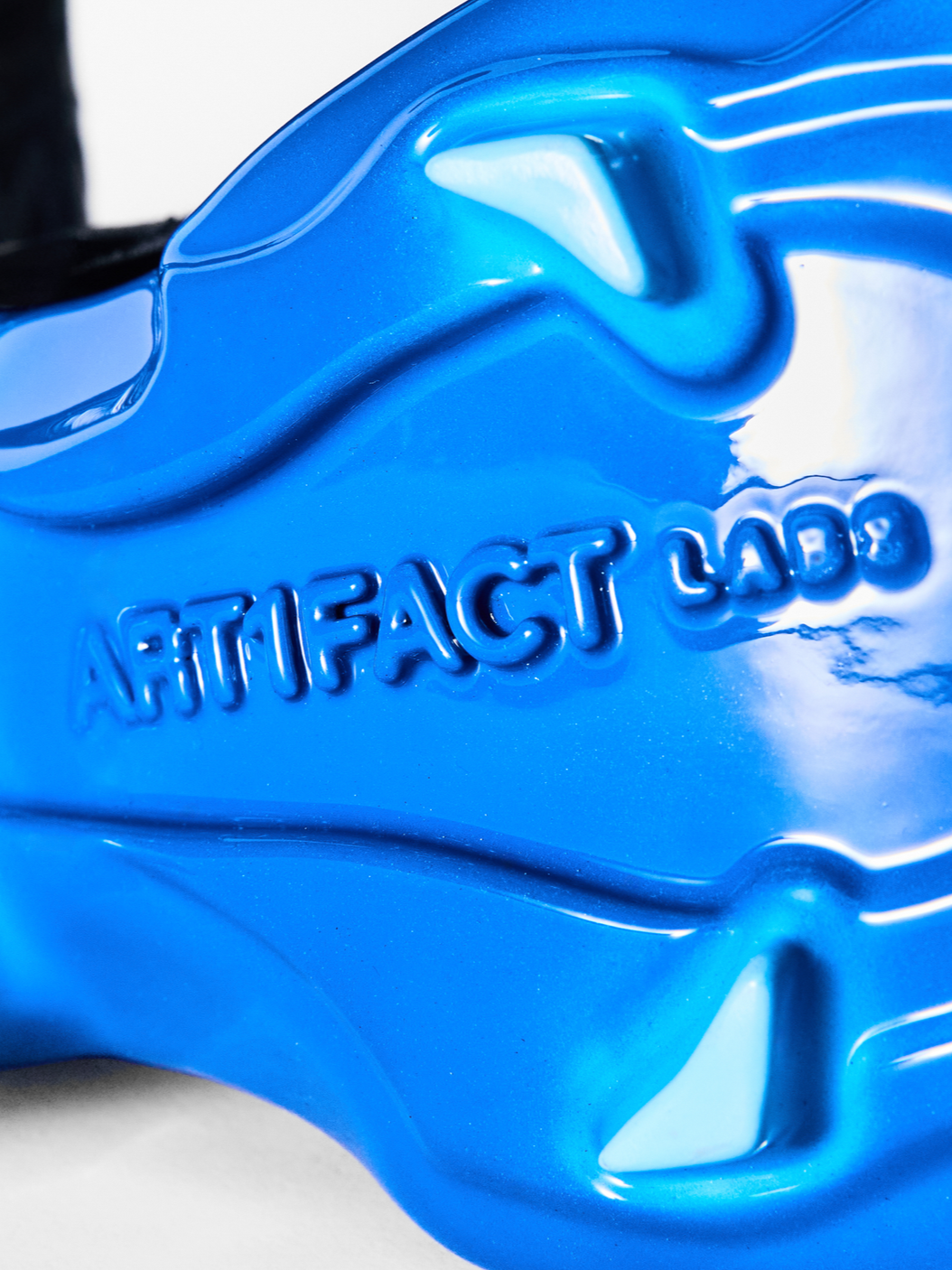
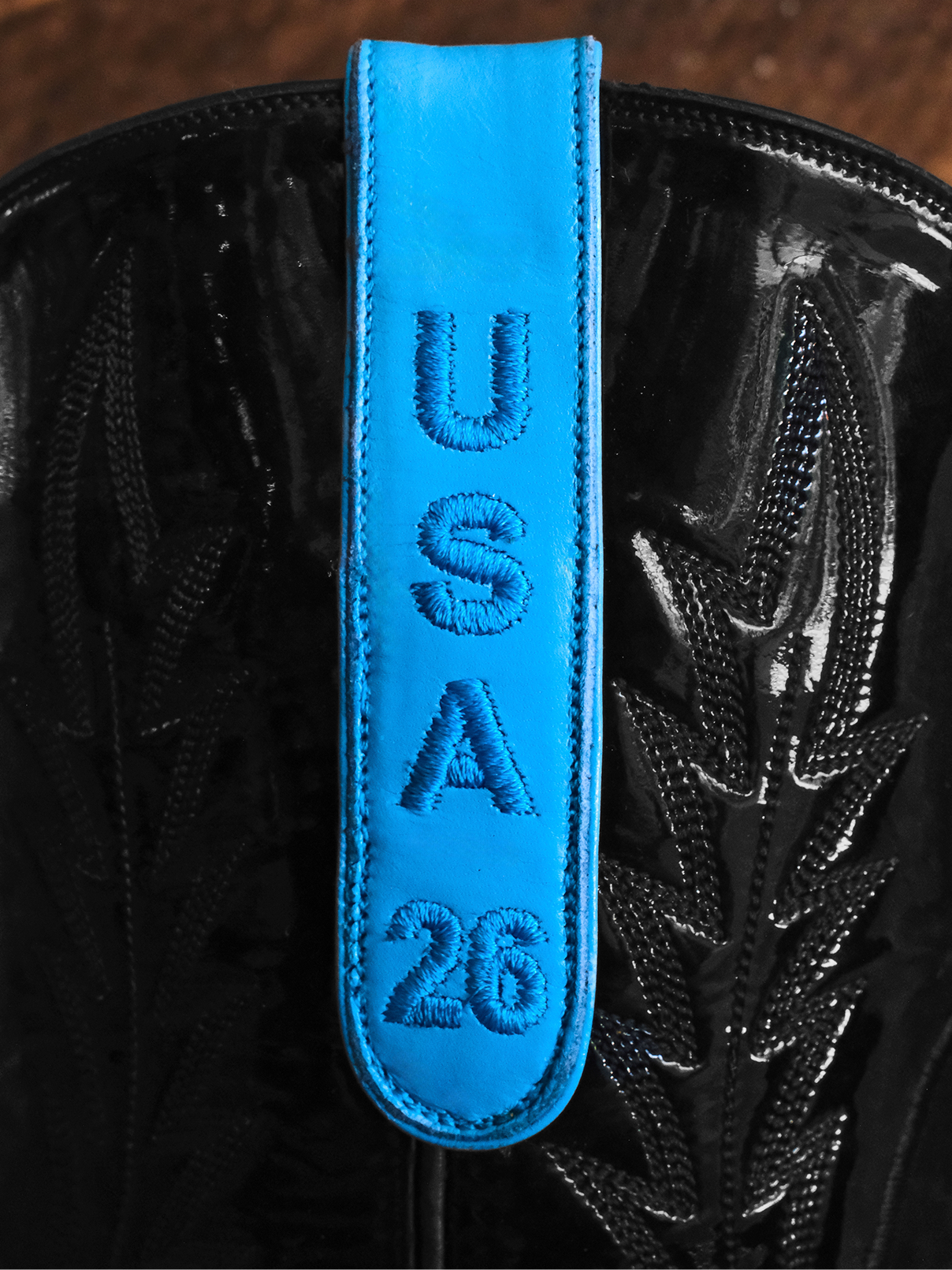
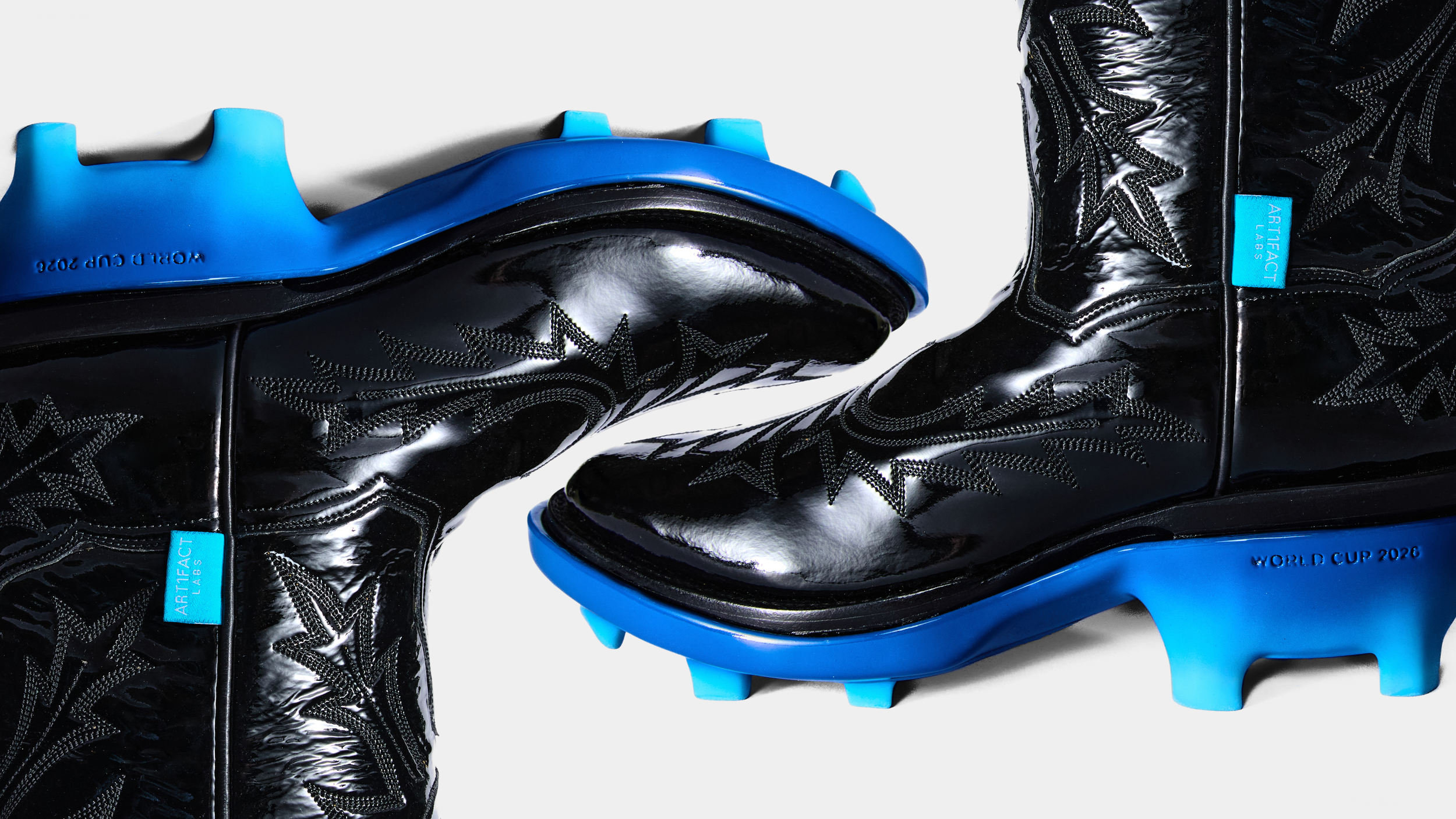
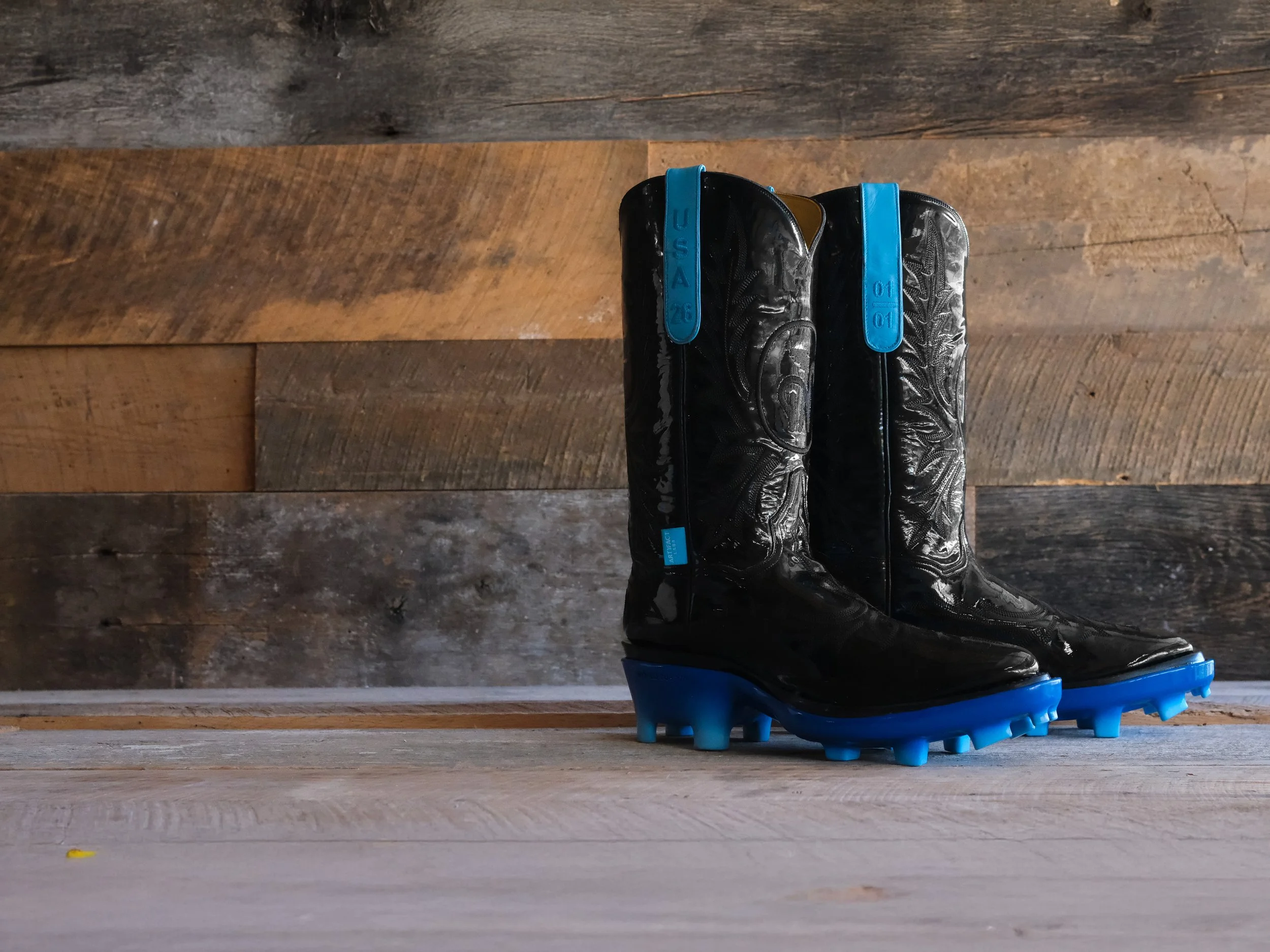
As the World Cup returns to American soil for the first time since 1994, Team One worked with Henry to mark the moment with something you don't see every day: a handcrafted cowboy boot mounted on an electric-blue soccer cleat.
It's a playful nod to Dallas, TX—one of the tournament's marquee host cities and home to one of Team One's offices—where a "boot" means something very different than it does on the world's football pitches.
The collaboration reflects the same commitment to craftsmanship that defines every ART1FACT LABS partnership. Every pair of Back at the Ranch boots is handcrafted, made to order, and carries a six-month waitlist—making the studio a natural partner for a project rooted in rarity.
The final result: a single, unmistakable boot. Signed and numbered.
01/01.